
Uber Eats is a food delivery service that lets you order from local restaurants and stores through an app, but the final price often surprises first-time users. Delivery fees, service fees, taxes and tips all stack on top of menu prices. This guide explains how the platform works, what you actually pay, and how to lower the total.
What Uber Eats is and where it operates
Ubereats is a food, grocery and retail delivery platform owned by Uber Technologies. It connects customers with restaurant partners, convenience stores, grocers and other local shops, then sends a courier to bring the order to your door.
The service runs in most large US metro areas and in many smaller cities and suburbs. Coverage varies by address, so a restaurant that is close to you may still be out of range. Enter your delivery address in the app or on the website to see what is available.
You can order through the Uber Eats delivery app on iOS and Android, or through the website in a browser. Both show the same menus, fees and order tracking. Many people also reach it through the main Uber app.
How Uber Eats works for customers
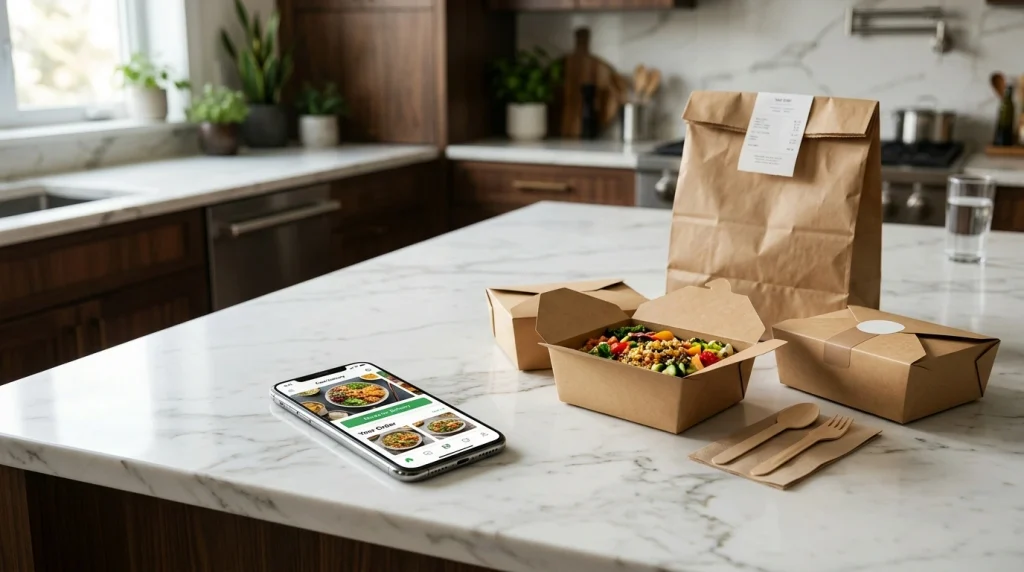
You pick a restaurant in the app, build an order, pay, and follow the courier on a live map. Uber Eats handles the rest.

- Set your address. Enter where you want the food delivered, or switch to pickup to collect it yourself.
- Browse and filter. Search by cuisine, restaurant name, rating or delivery time, then open a menu.
- Customize your order. Choose items, add special instructions and review the fees shown before checkout.
- Pay and tip. Use a saved card, digital wallet or promo credit, and add a courier tip.
- Track the courier. Watch status updates from preparation to arrival, and message the courier if needed.
Delivery brings food to your door, usually at a higher total. Pickup skips the delivery fee, and you collect the order at the restaurant counter.
Uber Eats fees and what you actually pay
Your total is the menu subtotal plus several add-ons. Uber Eats shows each line at checkout, so review it before you tap Place Order.
| Charge | What it covers | What to expect |
|---|---|---|
| Delivery fee | Courier trip from the restaurant to you | Varies by distance and demand; may be $0 with a promo or membership |
| Service fee | Platform operations and support | Typically a percentage of the subtotal |
| Small order fee | Applies when a cart falls below a minimum | Set by location; add items to avoid it |
| Taxes | State and local sales tax | Depends on your city |
| Menu markup | Some restaurant partners set higher in-app prices | Compare against the restaurant’s own menu |
| Tip | Goes to the courier | Your choice; you can adjust it |
Totals shift by city, time of day, distance and restaurant. Confirm current amounts in the app before ordering.
Saving money with Uber One and promotions
Uber One is the membership tied to Uber Eats and Uber rides. Benefits typically include a reduced or $0 delivery fee on eligible orders above a minimum subtotal, plus lower service fees. Pricing, minimums and perks vary by location, so confirm them in the app before you subscribe.
Beyond membership, a few habits cut the total:
- Check the Offers tab for first-order discounts and restaurant-specific deals.
- Enter promo codes at checkout; they usually carry expiry dates and order minimums.
- Choose pickup to skip delivery and service fees entirely.
- Batch orders to reach a membership minimum and split one fee.
- Pick nearby restaurants, since shorter distances can lower fees.
Uber Eats vs DoorDash and Grubhub
No single app wins everywhere. The best choice depends on which restaurants deliver to your address, what the final total is, and whether you already pay for a membership.
- Restaurant selection: Uber Eats and DoorDash both list a wide mix of national chains and local spots in most metro areas. Grubhub is strongest in certain cities and on some campuses. Coverage varies by address.
- Fees: All three charge delivery fees, service fees and often higher menu prices. Compare the checkout total, not the headline fee.
- Memberships: Uber One, DashPass and Grubhub+ each offer reduced delivery fees on eligible orders. Minimum order sizes and terms differ, so confirm them in each app.
- Availability: Rural areas may have only one or two options.
Enter the same order in each app before you pay. Ten seconds of comparison often reveals the cheapest option.
Uber Eats for couriers and restaurants
Couriers earn money per delivery. Pay typically combines a base fare for the trip with extra amounts for distance, time and busy periods, plus any customer tips. Earnings vary by city and time of day, so check the in-app estimate before accepting a job.
Basic requirements usually include a minimum age, a valid ID, a background check and a way to deliver, such as a car, bike or scooter. Rules differ by city and vehicle type, so confirm them in the courier sign-up flow.
Restaurants join as restaurant partners through a merchant application, then set up a menu, prices and hours. The platform charges a commission on each order, and the percentage depends on the plan chosen. A higher rate typically buys more visibility or delivery support, which shrinks the margin on every sale. Owners should compare plan terms against their food costs before signing up.
Safety, support and common order problems
Most order problems get fixed fastest inside the app, not by contacting the restaurant. Open your order, tap Help, and choose the issue that matches.
- Missing or wrong items: Report them soon after delivery, and add photos if the app asks. Refunds or credits typically cover only the affected items.
- Late or cold orders: Check live tracking first, then use the in-app help option if the delay runs long.
- Never received: Confirm the drop-off address and any delivery photo before you report it.
- Payment safety: Use a strong, unique password, turn on two-step verification, and review your receipts for charges you don’t recognize.
Keep all communication inside the app and never share verification codes. Refund rules and timing vary by case, so confirm the current policy in the app’s help center.
Key Takeaways
- The app is free to download and browse. You pay for the food plus a delivery fee, a service fee, taxes and an optional tip.
- Menu prices are often higher than in-store prices, because restaurant partners can set their own markups on the platform.
- Fees change with distance, demand, order size and location. Check the checkout screen for the full total before you place an order.
- Uber One can lower or remove delivery fees on eligible orders. It pays off only if you order often enough to cover the membership price.
- Promo codes and offers usually have minimum spends, expiry dates and restaurant limits, so read the terms.
- DoorDash and Grubhub price differently by restaurant and city. Compare the same cart in each app before you commit.
- For missing or wrong items, report the problem in the order details of the app. Do it quickly and include photos when you can.
Frequently Asked Questions About Uber Eats
Is the service free to use?
Downloading the app and browsing menus costs nothing. Placing an order does cost money. You pay for the food, taxes, a delivery fee, a service fee and any tip you add. Some orders, such as pickup, skip the delivery fee. Eligible Uber One members may also pay less on delivery.
How much does a typical order cost per delivery?
It varies by city, restaurant, distance and demand, so no single figure applies. Expect the food subtotal plus a delivery fee, a service fee, local taxes and a tip. Small orders may add a fee as well. The checkout screen shows the exact total before you confirm, so check it there.
Is Uber One worth it for food delivery?
It can be, if you order often. Uber One typically offers reduced service fees and a $0 delivery fee on eligible orders above a minimum subtotal. Add up your monthly orders, estimate the fees you would save, and compare that to the membership price. Confirm current terms and pricing in the app.
Why is it more expensive than ordering from the restaurant?
Three things stack up. Many restaurants raise menu prices on delivery platforms to offset commission costs. The app then adds delivery and service fees. Finally, taxes and a courier tip apply on top. Ordering pickup directly from the restaurant usually avoids most of these extra charges.
How do I get a refund?
Open the app, go to your order history, select the order and choose the help option. Then report the issue, such as a missing item, a wrong item or a late delivery. Add photos if you can. Refunds or credits depend on the problem and on the account’s history, so report it promptly.
Does it accept cash or EBT?
Cash payment is generally not available for US orders. The app takes cards and some digital wallets. EBT is accepted at select participating merchants in some states, typically for eligible food items only. EBT usually cannot cover fees or tips. Check availability for your address in the payment settings.
How do I become a delivery driver?
Sign up through the courier or driver sign-up page for your area. You typically need to meet the minimum age, hold valid ID, pass a background check and have an eligible car, scooter or bike, depending on your city. Requirements vary by location, so confirm them during the application.
Is it cheaper than DoorDash?
Sometimes, but not consistently. Menu markups, delivery fees, service fees and promotions differ by restaurant, city and time of day. Memberships such as Uber One and DashPass also change the math. The reliable method is to build the same cart in both apps and compare the final totals.
References & Further Reading
- Uber Eats Help – Uber Technologies
About This Article
This guide was written with AI assistance from publicly available information. Prices, nutrition values and availability can change, so confirm important details with the official source before you decide.