
Cookout nutrition is hard to judge because a single plate can hold anywhere from a modest meal to a day's worth of sodium and saturated fat. Burgers, hot dogs, creamy sides, sugary drinks and desserts add up fast, and most people never see the totals. This guide shows what is in classic foods and how to keep the flavor while trimming the excess.
What cookout nutrition really involves
Cookout nutrition is the calories, macronutrients and key nutrients in the food and drinks you serve outdoors, plus how grilling changes them. A backyard meal is harder to judge than a weeknight dinner because nothing is measured. Burgers vary in size, sides arrive in shared bowls, and refills are constant.
Four factors do most of the damage: portion size, sodium, added sugar and saturated fat. Hot dogs, sausages, chips, baked beans, sauces and sweet drinks can each add a large share of the day’s limits. The Dietary Guidelines for Americans and the American Heart Association set the benchmarks for sodium, added sugar and saturated fat.
This guide covers classic mains, sides, desserts, drinks, plate building, swaps, grilling methods and special diets. For menu planning, see these cookout menu ideas.
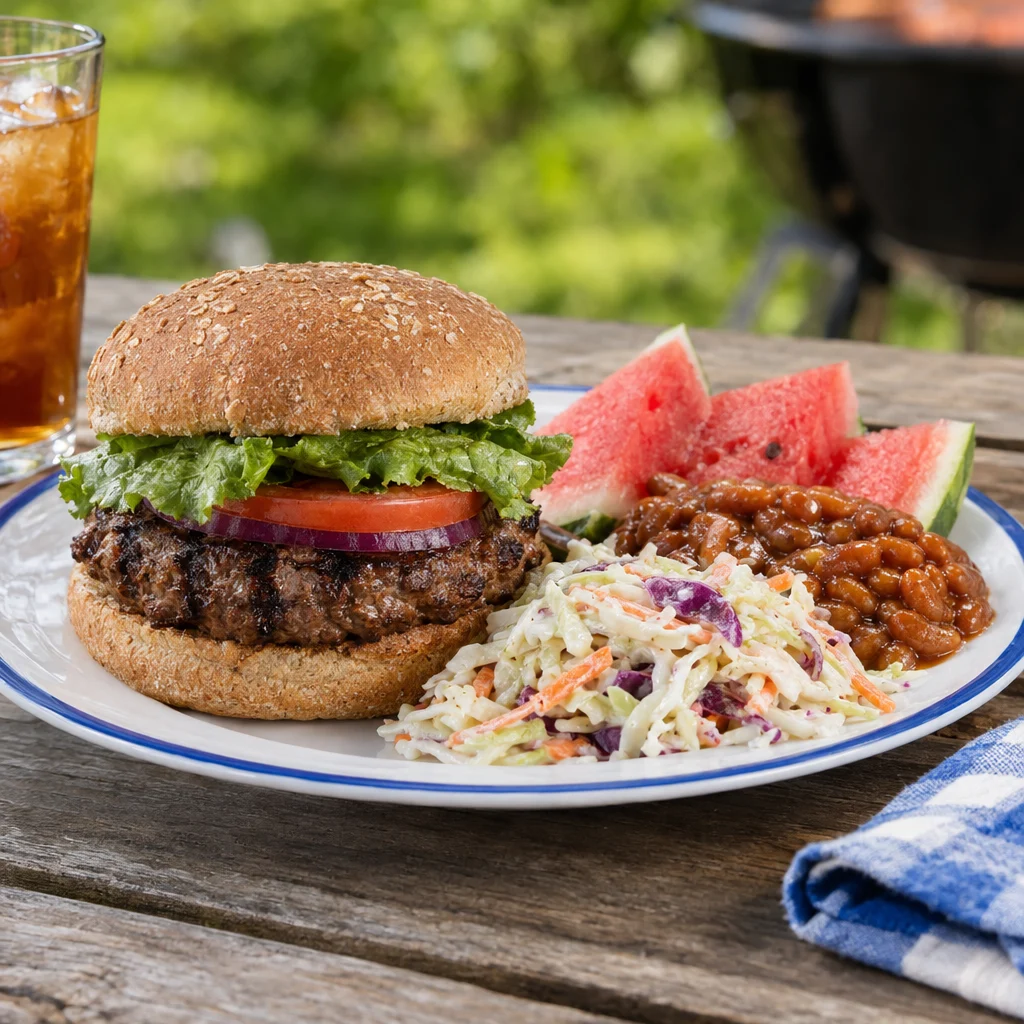
Cookout nutrition varies most by portion and preparation, so the table below uses typical ranges. Labels, brands and fat percentages shift the numbers, so check the package or USDA FoodData Central for exact values.
| Food (typical serving) | Calories | Protein | Fat | Carbs | Sodium |
|---|---|---|---|---|---|
| Beef patty, 80/20, ~4 oz raw | 230–290 | 20–22 g | 15–20 g | 0 g | 60–100 mg |
| Beef hot dog, 1 frank | 150–190 | 5–7 g | 13–17 g | 2–4 g | 450–600 mg |
| Chicken breast, skinless, ~4 oz cooked | ~170–200 | ~30–35 g | 3–5 g | 0 g | 70–100 mg |
| Bratwurst, 1 link | 280–340 | 12–16 g | 24–30 g | 2–4 g | 700–900 mg |
| Corn on the cob, 1 medium ear | 90–130 | 3–4 g | 1–2 g | 19–29 g | under 20 mg |
| Hamburger or hot dog bun | 120–150 | 4–5 g | 2 g | 22–28 g | 200–300 mg |
| Potato salad, ½ cup | 180–250 | 2–3 g | 10–16 g | 15–20 g | 300–450 mg |
| Baked beans, ½ cup | 120–190 | 5–6 g | 1–3 g | 25–35 g | 400–600 mg |
Nutrition of cookout sides, sauces and desserts
Sides and sauces often add more calories, sugar and sodium than the grilled main. Portion size and dressing drive most of the difference, so cookout nutrition depends heavily on what surrounds the protein.
- Potato salad and coleslaw: mayonnaise-based dressings add most of the fat and calories. Vinegar-based slaw is typically lighter.
- Baked beans: they bring fiber and protein, but sweet sauces add sugar and sodium.
- Chips: a handful turns into several servings fast, and salt adds up.
- Barbecue sauce: it is usually sugar-heavy and salty, and a few tablespoons add up quickly.
- Desserts: pies, cobblers and ice cream add sugar and saturated fat.
Check the Nutrition Facts label on store-bought sides and sauces, since values vary widely by brand.
Drinks and alcohol at a cookout
Drinks often add more sugar to a cookout than the food does. A 12-ounce can of regular soda typically has around 140 to 150 calories and about 35 to 40 grams of sugar. Lemonade and sweet tea vary widely by recipe, and a large glass can match or exceed a soda. The Dietary Guidelines for Americans advise limiting added sugars to under 10 percent of daily calories.
Alcohol adds calories without much nutrition. Typical ranges, which vary by brand and pour:
- Light beer: roughly 90 to 110 calories per 12 ounces.
- Regular beer: roughly 140 to 200 calories.
- Sugary cocktails: often 200 to 400 calories or more per glass.
Lower-sugar options include sparkling water with citrus, unsweetened iced tea, and lemonade cut half and half with water. Check labels for exact numbers.
How to build a balanced cookout plate
The Dietary Guidelines for Americans point to the same plate model that works at a picnic table: fill about half with vegetables and fruit, and split the rest between lean protein and whole grains. This is the simplest way to apply cookout nutrition without counting anything.
- Start with produce. Fill half the plate with grilled vegetables, salad, corn or fruit before anything else.
- Add one protein. Choose a burger, chicken breast, fish or a hot dog, and aim for a portion about the size of your palm.
- Pick a whole-grain base. Use a whole-wheat bun, brown rice salad or quinoa for roughly a quarter of the plate.
- Sauce on the side. Spoon on a small amount of sauce, since it adds sodium and sugar quickly.
- Wait before seconds. Pause for ten minutes, then decide if you are still hungry.
Healthier swaps and grilling methods
Small swaps cut saturated fat and sodium without making the plate boring. Start with the protein, then change how you cook it.
- Lean proteins: Choose skinless chicken breast, fish, shrimp or lean ground turkey over higher-fat burgers and hot dogs.
- Plant-based options: Grill portobello caps, bean burgers or tofu skewers. Check labels for sodium.
- Vegetables: Brush corn, zucchini, peppers and onions with a little oil. Grill them until tender and lightly browned.
- Marinades: Use citrus, vinegar, herbs and garlic. Acidic, herb-based marinades may reduce HCA formation on meat.
Charring matters because high-heat cooking of meat forms heterocyclic amines (HCAs). Trim fat, flip often, avoid flare-ups and cut away blackened bits.
Use a food thermometer. The USDA recommends 165°F for poultry, 160°F for ground beef and 145°F for whole cuts of beef, pork and fish.
Cookout nutrition for special diets
Most diets fit a backyard gathering if you plan the plate, not the whole menu.
- Low-carb: Skip the bun, use lettuce wraps, and fill up on grilled meat, vegetables and salads.
- High-protein: Choose grilled chicken breast, fish, lean burgers or shrimp skewers.
- Heart-healthy: Follow American Heart Association guidance. Limit sodium and processed meats such as hot dogs, and favor fish, poultry and vegetables.
- Diabetic-friendly: Pair carbs with protein and fiber, and watch sweet sauces, sugary drinks and desserts.
- Vegetarian: Grill portobello caps, veggie skewers, corn and bean burgers. Check labels for sodium.
- Kid-friendly: Offer small portions, fruit kabobs, and plain grilled chicken with dips on the side.
For menu ideas that cover every guest, see these cookout menu ideas.
Key Takeaways
- Portions and extras drive the total. Buns, cheese, sauces, sides, desserts and drinks often add more calories than the grilled protein itself.
- Choose leaner proteins. Skinless chicken, fish, pork tenderloin, sirloin and lean ground meat give you more protein for less saturated fat.
- Watch sodium. Hot dogs, sausages, sauces, pickles and chips add up quickly, so check labels against the daily limits in the Dietary Guidelines for Americans and American Heart Association advice.
- Build the plate around produce. Fill about half of it with vegetables, salad or fruit, then add one protein and a modest portion of starch.
- Drinks count. Sweet tea, soda, lemonade and cocktails can add as many calories as a side dish, so alternate with water.
- Grill smarter. Marinate, trim fat, flip often and avoid charring to reduce heterocyclic amines and other compounds formed at high heat.
- Swap, don’t skip. Small changes such as lettuce wraps, grilled vegetables or yogurt-based dips let you join in without missing the fun.
Frequently Asked Questions About cookout nutrition
How many calories are in a typical cookout meal?
It varies widely, but a plate with a cheeseburger on a bun, a creamy side, chips, a dessert and a sweet drink commonly lands somewhere between 800 and 1,500 calories or more. Portion size, toppings and drinks make the biggest difference. Check labels or a USDA database entry for your specific foods.
What is the healthiest meat to grill at a cookout?
Skinless chicken breast, fish such as salmon, and lean cuts like pork tenderloin or sirloin are strong choices. Lean ground turkey or 90–95% lean beef also works for burgers. The American Heart Association recommends fish and skinless poultry, and fatty fish adds omega-3 fats.
Are hot dogs and burgers bad for you?
Occasional hot dogs and burgers fit in most eating patterns. The concern is frequency and size. Hot dogs are processed meat high in sodium, and large, fatty burgers add saturated fat. Current dietary guidance suggests limiting processed meats. Choose leaner patties, smaller portions and plenty of vegetables alongside.
How can I eat healthy at a cookout without feeling left out?
Take the same food as everyone else, but plate it differently. Fill half your plate with salad, grilled vegetables or fruit, add one protein, and pick one favorite indulgence. Bring a healthy dish to share, drink water between other beverages, and eat slowly so the meal still feels social and satisfying.
Is grilled food carcinogenic?
Cooking muscle meat at high heat forms heterocyclic amines, and fat dripping onto flames creates smoke compounds called PAHs. Lab studies link both to cancer risk, but human evidence is less clear. You can lower exposure by marinating, trimming fat, flipping often, avoiding charred bits and grilling more vegetables and fish.
How much sodium is in common cookout foods?
It varies by brand, but a single hot dog often has several hundred milligrams, and the bun, cheese, ketchup, pickles and chips add more. The Dietary Guidelines suggest keeping sodium under 2,300 mg a day, and the American Heart Association recommends an ideal limit of about 1,500 mg. Read the labels.
What are good low-carb options at a barbecue?
References & Further Reading
- Dietary Guidelines for Americans – U.S. Department of Agriculture and U.S. Department of Health and Human Services
- FoodData Central – U.S. Department of Agriculture
About This Article
This guide was written with AI assistance from publicly available information. Prices, nutrition values and availability can change, so confirm important details with the official source before you decide.
Pingback: Cook Out Menu: Cookout Menu: Complete Guide to Food and
Pingback: Ubereats: How It Works, Fees and Costs Explained
Pingback: Cookout Allergen Information: A Host's Safety Guide