
Cookout nutrition facts are hard to pin down because every plate is built differently, from the burger size to the scoop of potato salad. Most guests have no idea how many calories, how much sodium and how much saturated fat they are piling on. This guide breaks down each part of the plate so you can enjoy the food and still know what you are eating.
What a Typical Cookout Plate Adds Up To
A full cookout plate often lands between 800 and 1,500 calories, depending on portions and extras. These cookout nutrition facts show why: the main dish is rarely the problem, the add-ons are.
A burger or hot dog on a bun, a scoop each of potato salad and coleslaw, chips, and a sugary drink can stack up fast. Sodium climbs just as quickly. Processed meats, buns, sauces and creamy sides each add several hundred milligrams, so one plate can approach the daily limit of 2,300 mg. Saturated fat follows the same pattern, driven by cheese, bacon, mayonnaise dressings and fatty beef.
Exact numbers vary by recipe and brand. Check USDA FoodData Central for specific items.
Nutrition Facts for Grilled Mains
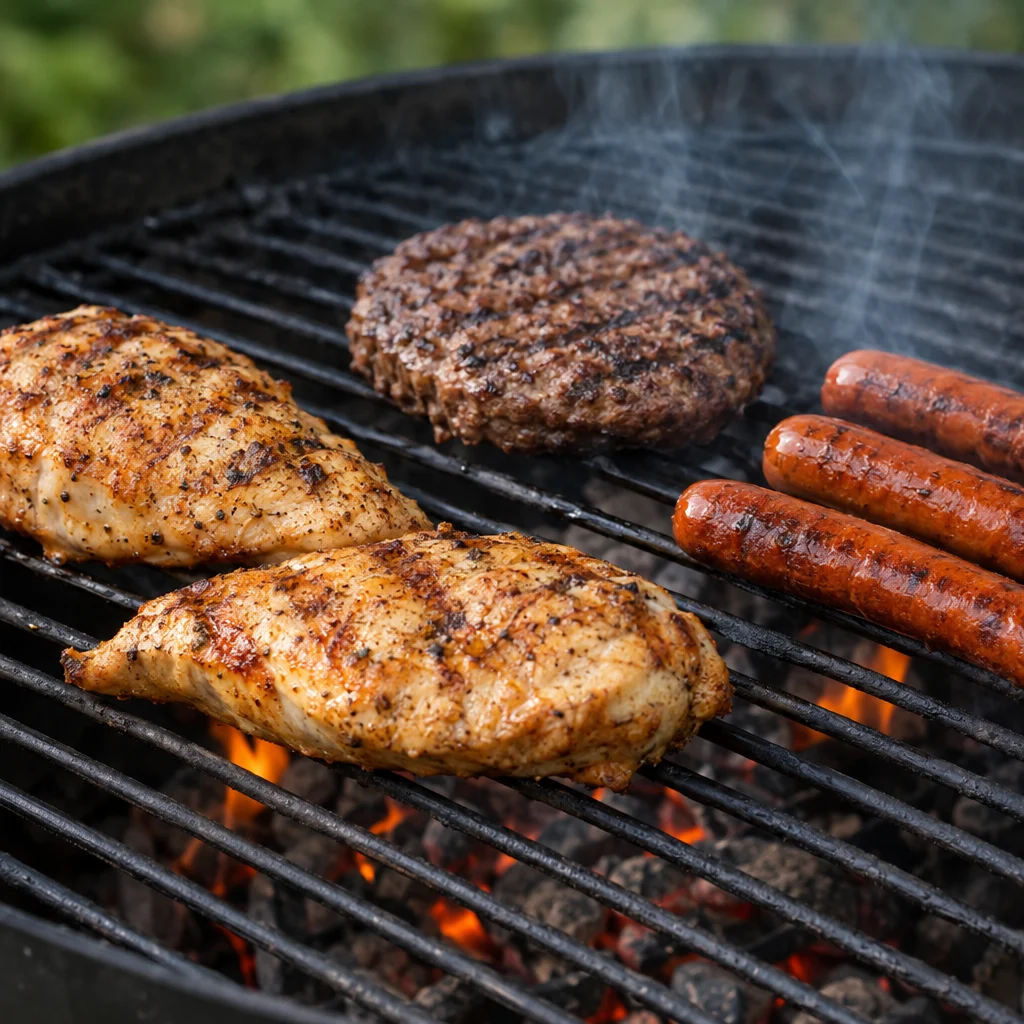
Protein-heavy mains set the calorie baseline for your plate, and sodium and saturated fat vary the most between them. These cookout nutrition facts show typical ranges for one serving. Brands, fat percentages, marinades and sauces shift the numbers, so check package labels or USDA FoodData Central for exact figures.
| Main (typical serving) | Calories | Protein | Fat | Sodium |
|---|---|---|---|---|
| Hamburger patty, 4 oz cooked | 250–330 | 22–26 g | 16–24 g | 60–400 mg |
| Beef hot dog, 1 link | 150–190 | 5–7 g | 13–17 g | 450–600 mg |
| Bratwurst, 1 link | 250–330 | 12–18 g | 20–28 g | 500–900 mg |
| Grilled chicken breast, 4 oz | 150–190 | 28–35 g | 3–5 g | 70–400 mg |
| Pork ribs with sauce, 3–4 bones | 400–600 | 25–35 g | 28–45 g | 500–1,000 mg |
| Sirloin steak, 6 oz cooked | 280–380 | 38–45 g | 12–20 g | 60–500 mg |
| Veggie burger patty | 100–200 | 8–20 g | 3–10 g | 300–600 mg |
Grilled chicken and steak deliver the most protein per calorie. Sausages and ribs bring the most saturated fat and sodium. Veggie burgers are lighter, but many are salty.
Cookout Side Dishes and Their Nutrition
Sides often add more calories than the grill does. Mayonnaise, sugar and cheese drive most of the difference. Typical home-style servings vary by recipe, so check USDA FoodData Central for exact values.
- Potato salad: Mayonnaise adds hidden fat, and a scoop can rival a hamburger patty in calories.
- Coleslaw: Cabbage is light, but creamy dressing adds fat and sugar.
- Baked beans: Good fiber and protein, plus added sugar and sodium from the sauce.
- Mac and cheese: Heavy in saturated fat, sodium and refined carbs.
- Corn on the cob: Lean and fibrous until butter and salt pile on.
- Chips: Fat and sodium add up fast, and handfuls are easy to lose count of.
- Fruit salad: The lightest option, with natural sugar and vitamins.
Buns, Condiments and Toppings
The patty gets the attention, but the extras often add as many calories and as much sodium as the meat. Amounts vary by brand and portion, so check package labels or USDA FoodData Central for exact numbers.
- Bun: A standard white bun typically adds about 120 to 150 calories. Oversized or brioche buns run higher.
- Cheese: One slice typically adds 50 to 100 calories, plus extra sodium and saturated fat.
- Bacon: Two slices add a modest number of calories but a noticeable amount of sodium.
- Mayo: A tablespoon packs roughly 90 to 100 calories, nearly all from fat.
- Ketchup and BBQ sauce: Both add sugar and sodium. A generous pour of BBQ sauce can top a tablespoon of ketchup by a wide margin.
- Mustard: It adds almost no calories, which makes it the lightest option on the table.
Desserts and Drinks at the Cookout
Desserts and drinks often add more calories than the grilled main, and most of those calories come from sugar. Exact numbers vary by recipe and serving size, so check USDA FoodData Central or the package label.
- Pie: A slice typically runs a few hundred calories, with sugar and saturated fat from the crust and filling.
- Ice cream: A half-cup scoop is a modest treat, but cones and toppings add up quickly.
- S’mores: Each one combines marshmallow, chocolate and graham cracker. Two or three can equal a small dessert.
- Watermelon: It is mostly water, low in calories, and has natural sugar.
- Soda and sweet tea: A 12-ounce serving typically carries around 8 to 10 teaspoons of sugar. Refills double that.
- Lemonade: It is similar to soda unless made with less sugar.
- Beer: A regular 12-ounce can typically has about 150 calories, and light versions have fewer.
Smart Swaps for a Lighter Cookout Plate
Small swaps cut calories, sodium and saturated fat without ruining the meal. The Dietary Guidelines for Americans recommend filling half your plate with vegetables and fruit, choosing lean proteins, and limiting sodium and saturated fat.
- Protein: Choose grilled chicken breast, fish or lean ground beef instead of a hot dog or a large fatty burger.
- Bun: Go open-faced, or use a whole-grain bun or lettuce wrap.
- Sides: Pick corn on the cob, grilled vegetables or a fresh salad over mayonnaise-based potato salad and coleslaw.
- Portions: Take a small scoop of creamy sides, and skip a second helping of the main.
- Drinks: Choose water or unsweetened iced tea over soda.
Grill Safety and Nutrition Considerations
High-heat grilling of meat can form heterocyclic amines (HCAs) and polycyclic aromatic hydrocarbons (PAHs) on charred surfaces. Lab studies link these compounds to cancer risk, though human evidence is less settled. Processed meats such as hot dogs also bring high sodium and saturated fat, and health agencies advise limiting them.
These steps lower your exposure:
- Marinate first. Acidic marinades with herbs may reduce HCA formation.
- Trim fat to cut flare-ups and smoke.
- Flip often and cook over medium heat, not roaring flames.
- Cut away charred bits before eating.
- Pre-cook larger cuts briefly indoors, then finish on the grill.
- Use a thermometer. Cook ground beef to 160°F and poultry to 165°F.
Keep hot dogs an occasional choice, and fill more of the plate with grilled chicken, fish and vegetables.
Key Takeaways
- Plates add up quickly. A burger or hot dog, two sides, and a bun typically reach 700 to 1,200 calories before dessert and drinks.
- Mains differ. Grilled chicken and lean burgers give you protein with less saturated fat. Hot dogs and sausages bring more sodium.
- Creamy sides hide calories. Potato salad and mayo-based coleslaw often cost more than the grilled food next to them. Corn on the cob and vinegar-based slaw are lighter.
- Extras count. Buns, cheese, bacon, sauces, sweet tea, and desserts can add as many calories as the main.
- Sodium and saturated fat deserve a look. Processed meats, sauces, and cheese push both up, so compare labels and serving sizes.
- Small swaps work. Build your plate with protein and vegetables first, keep portions of creamy sides modest, and cook meat without charring it. For a deeper breakdown, see this cookout nutrition guide on calories, macros and smarter choices.
Frequently Asked Questions About cookout nutrition facts
How many calories are in a typical cookout meal?
A typical cookout plate with a burger or hot dog, a bun, and two sides usually runs about 700 to 1,200 calories, before dessert and drinks. Portion size, mayo-based sides, and cheese drive the range. Check USDA FoodData Central for specific foods, since recipes and serving sizes vary widely.
How many calories are in a hamburger with a bun?
A plain hamburger with a bun typically falls between 300 and 600 calories, depending on patty weight, bun size, and fat content. Cheese, bacon, and spreads each add more. A quarter-pound patty on a standard bun sits near the middle of that range. Confirm exact values in USDA FoodData Central.
Is a hot dog or a hamburger healthier?
References & Further Reading
- USDA FoodData Central – U.S. Department of Agriculture
- Dietary Guidelines for Americans – U.S. Department of Health and Human Services and USDA
- Centers for Disease Control and Prevention Nutrition – Centers for Disease Control and Prevention
About This Article
This guide was written with AI assistance from publicly available information. Prices, nutrition values and availability can change, so confirm important details with the official source before you decide.