
Cookout sauces can make a grilled meal feel complete or leave it tasting flat, and with so many bottles, jars and recipes, it is hard to know which ones to serve. This guide sorts the options by style, food and effort so you can build a sauce lineup that suits your menu and your guests without overbuying.
What Makes a Great Cookout Sauce
A great sauce balances four flavors: sweet, tangy, spicy and smoky. Sweetness (brown sugar, molasses, honey) helps meat caramelize. Acid (vinegar, mustard, citrus) cuts through fat and keeps each bite lively. Heat adds contrast, and smoke ties the sauce to the grill. When one note dominates, the sauce tastes flat or harsh.
The best cookout sauces also do more than one job. Use a sauce as a marinade before grilling, a glaze near the end of cooking, or a dip at the table. Each role calls for a different approach.
- Marinade: thin, acidic and low in sugar, so it flavors the food without burning.
- Glaze: thicker and sweeter, brushed on during the final minutes.
- Dip or condiment: bold and creamy, served cold or warm at the table.
Pick a few sauces with different profiles so guests can mix and match.
Classic American BBQ Sauce Styles
Regional barbecue sauce falls into a few clear styles, and each one suits different meats and different guests. Knowing the differences makes it easy to pick cookout sauces that fit your menu.
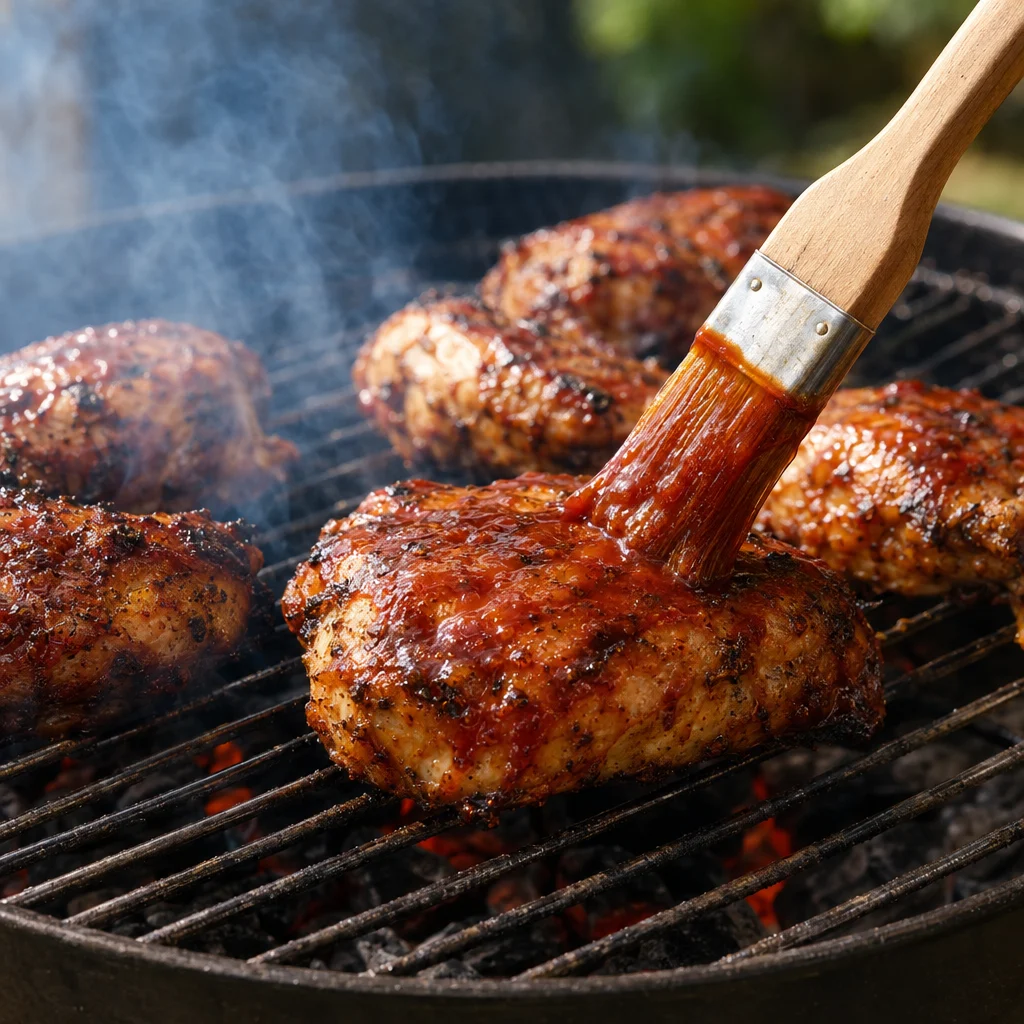
- Kansas City: thick, sweet and tomato-based, with molasses or brown sugar and a smoky edge. It works on ribs, burnt ends and burgers.
- Carolina vinegar: thin and tangy, built on vinegar and red pepper flakes. It cuts through rich pulled pork.
- Memphis: tomato-based but thinner and less sweet, with a vinegar tang and spice. Many cooks use it on ribs.
- Texas: savory and peppery, often with beef drippings, chili and cumin. It pairs with brisket.
- Alabama white: a mayonnaise-based sauce with vinegar, black pepper and horseradish. It is traditional on smoked chicken.
Cookout Sauces for Burgers, Hot Dogs and Sandwiches
Burgers and hot dogs need creamy, tangy or sharp toppings that cut through rich, smoky meat. These condiment-style cookout sauces work best because guests can build their own plate.
- Special burger sauce: Mayonnaise, ketchup, mustard and chopped pickles make a simple, familiar spread.
- Spicy mayo: Stir hot sauce or sriracha into mayonnaise for heat on burgers, chicken sandwiches and pulled pork.
- Aioli: Garlic-forward and silky, it suits burgers and grilled vegetable sandwiches. Roasted garlic or lemon versions are easy to vary.
- Mustard blends: Mix yellow mustard with honey, or whole-grain mustard with a splash of vinegar, for brats and hot dogs.
- Relishes: Sweet pickle relish, onion relish or a chunky pepper relish adds crunch and acidity.
Keep mayo-based sauces chilled until serving. Set out small bowls with their own spoons, and replace them if they sit in the heat for long. The USDA advises limiting how long perishable foods stay at outdoor temperatures, so check its current guidance for exact time limits.
Best Sauce Pairings by Grilled Food
Match the sauce to the food’s fat, smoke and delicacy. Rich, fatty cuts handle sweet or tangy sauces. Lean or delicate foods need something brighter. Use this table to choose among your cookout sauces, then adjust to taste.
| Grilled Food | Best Sauce Match | Why It Works |
|---|---|---|
| Ribs | Kansas City BBQ sauce | Thick, sweet glaze caramelizes on the bark |
| Chicken | Alabama white sauce | Tangy, creamy coating keeps lean meat moist |
| Pulled pork | Carolina vinegar sauce | Acid cuts through rich, fatty meat |
| Steak | Chimichurri | Fresh herbs and garlic brighten the beef |
| Seafood | Lemon aioli | Light and creamy without hiding the fish |
| Vegetables | Garlic aioli or chimichurri | Adds richness and a fresh finish |
Apply sugary sauces during the last few minutes of grilling, since sugar burns fast over high heat. Serve fresh sauces at the table.
Fresh and Bold Sauces Beyond BBQ
Not every grill needs a sweet, smoky glaze. Bright, herb-heavy and spicy options cut through rich meat and suit lighter menus. They also add variety to a table of cookout sauces built around tomato and vinegar.
- Chimichurri: parsley, garlic, oregano, olive oil and red wine vinegar. It is excellent on steak, sausages and grilled vegetables.
- Salsa verde: tomatillos, cilantro, lime and chiles. Spoon it over chicken, pork or tacos.
- Yogurt-herb sauce: plain yogurt with dill, mint or chives, lemon and garlic. It cools spicy kebabs and lamb burgers.
- Mango salsa: sweet fruit, red onion, lime and jalapeño. It works well with grilled fish, shrimp and chicken.
- Hot sauces: set out two or three, from mild and tangy to very hot, so guests control the heat.
Keep fresh herb and fruit sauces chilled until serving, and refill small bowls rather than leaving one large batch in the sun.
Homemade vs Store-Bought Cookout Sauces
Choose store-bought for speed and consistency, and homemade when you want control over flavor. Most hosts do best with a mix of both.
Cost: A bottle of barbecue sauce is cheap per serving, but a large crowd drains it fast. Homemade versions built on pantry staples such as ketchup, vinegar, mustard and brown sugar often cost less per cup. Prices vary by store, so compare unit prices.
Flavor control: Making your own lets you adjust sweetness, heat and smoke. Mayo-based sauces like aioli and Alabama white sauce taste far better fresh. Chimichurri also needs fresh herbs to shine.
Convenience: Bottled sauces keep for weeks, need no prep and suit last-minute plans. Many cooks upgrade a bottle with a splash of vinegar, hot sauce or minced garlic.
Food safety matters with homemade batches. Follow USDA guidance on refrigeration and keep mayo-based sauces chilled until serving.
Key Takeaways
- Balance matters most. A good sauce brings sweetness, acid, salt, heat, or fat that the grilled food lacks.
- Know the core BBQ styles. Kansas City is thick and sweet, Carolina vinegar is thin and tangy, and Alabama white is creamy and peppery.
- Keep burgers and hot dogs simple. Ketchup, mustard, aioli, and a good relish cover most guests.
- Match sauce to food. Sweet glazes suit ribs, tangy sauces cut through pork, and herb sauces like chimichurri brighten steak and chicken.
- Time your sauce. Brush sugary sauces on near the end of grilling so they caramelize instead of burning.
- Follow USDA food safety basics. Keep mayo-based sauces cold, and never reuse raw-meat marinade as a finishing sauce unless you boil it first.
- Mix homemade and store-bought. Make one or two signature sauces and fill in the rest with quality bottles.
Frequently Asked Questions About cookout sauces
What is a cookout sauce?
A cookout sauce is any sauce, glaze, or condiment served with grilled food. That includes barbecue sauce styles such as Kansas City, Carolina vinegar, and Alabama white, plus ketchup, mustard, aioli, and chimichurri. The best ones add moisture, acidity, sweetness, or heat to smoky, charred meat and vegetables.
How does a cookout sauce work?
Sauces balance and amplify flavor. Acid cuts through rich meat, sugar caramelizes into a glaze, fat adds moisture, and spice adds heat. Thick, sweet sauces go on late in grilling so they don’t burn. Thin vinegar or herb sauces work well as mops, marinades, or finishing drizzles at the table.
Is a cookout sauce worth it?
Yes, in most cases. A few inexpensive sauces can transform a plain burger, chicken breast, or hot dog. Homemade versions give you control over sweetness and salt, while store-bought bottles save time. Two or three well-chosen options usually serve a crowd better than a table crowded with bottles.
What should I know before trying new cookout sauce recipes?
Check guests’ heat tolerance and allergies, since aioli contains egg and many sauces contain mustard. Match each sauce to the food, and apply sugary ones late. Keep mayo-based sauces cold. USDA guidance generally says perishable food should not sit out more than two hours, or one hour in hot weather.
References & Further Reading
- Kansas City Barbecue Society – Kansas City Barbecue Society
About This Article
This guide was written with AI assistance from publicly available information. Prices, nutrition values and availability can change, so confirm important details with the official source before you decide.