
The cookout is a casual outdoor meal where guests eat food cooked on a grill, and hosting a good one takes more planning than most people expect. Running out of food, serving undercooked meat, or juggling too many dishes at once can turn a relaxed afternoon into a stressful one. This guide walks you through planning, menu choices, portions and grilling basics so you can host with confidence.
What a cookout is and how it differs from a barbecue
The cookout is a casual outdoor meal where guests eat food cooked over live fire, usually on a charcoal or gas grill. In the United States it most often happens in a backyard, a park or a driveway, and it tends to cluster around summer holidays like Memorial Day, the Fourth of July and Labor Day.
The main difference from a barbecue is method. A traditional barbecue means slow-smoking large cuts, such as brisket, ribs or pork shoulder, at low heat for hours.
The cookout favors fast, direct-heat grilling: burgers, hot dogs, chicken pieces, sausages and vegetables that finish in minutes. Many people use the words interchangeably, and a backyard barbecue can be either. The distinction matters mainly when you plan your timing and equipment.
A picnic differs too. Picnic food is usually cooked ahead and served cold or at room temperature, so no grill is needed. At a cookout, the grill is the center of the party, and the food comes off it hot.
- Cookout: quick grilling, casual setting, hot food served as it cooks.
- Barbecue: low and slow smoking, long cook times, often planned a day ahead.
- Picnic: pre-made food, portable, no cooking on site.
How to plan the cookout step by step
Start with the date and the headcount, because every other choice follows from those two numbers. Work backward from the day so nothing lands on you at the last minute.
- Set the date. Pick a weekend afternoon, check the forecast five days out, and name a rain plan. Summer holidays book up fast, so send invitations two to three weeks ahead.
- Build the guest list. Count adults and kids separately, and ask about food allergies and dietary needs when guests reply.
- Set a budget. Divide a total by headcount. Protein costs the most, so decide on it first and fill in sides around it.
- Set up the grill. Place it on level ground, well away from fences, eaves and play areas. Check your fuel, and clean the grates a day early.
- Plan seating and shade. Provide one seat for every two or three guests, and add an umbrella or canopy over the food table and the main seating area.
- Write a day-of timeline. Prep sides in the morning, light the grill 30 minutes before cooking, and serve food within an hour of guests arriving.
Keep cold dishes in coolers or on ice until you serve them, and put away leftovers within two hours (one hour above 90°F), following USDA food safety guidance.
The Cookout menu ideas that always work
A strong the cookout menu pairs two or three grilled mains with cold sides, one sweet finish and plenty of drinks. Keep the grill list short so you can cook everything at once.
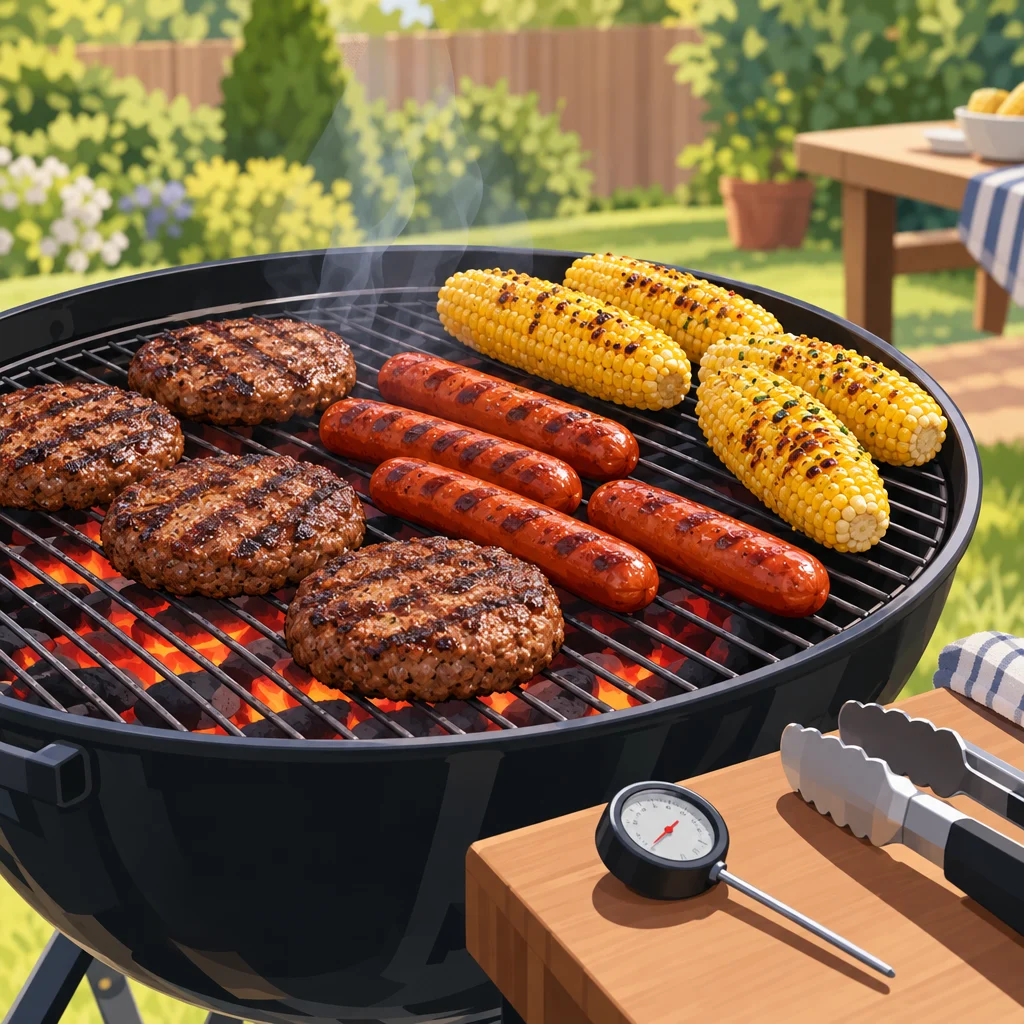
- Classic mains: burgers, hot dogs, bratwurst, bone-in chicken thighs and marinated flank steak.
- Side dishes: potato salad, coleslaw, baked beans, corn on the cob, pasta salad and a green salad with dressing on the side.
- Desserts: watermelon slices, peach cobbler, brownies or ice cream sandwiches that need no plates.
- Drinks: iced tea, lemonade, sparkling water and a cooler of canned soda or beer for adults.
Options for every guest
Vegetarian guests will appreciate veggie burgers, grilled portobello caps or foil-wrapped vegetable skewers. Cook them on a clean spot of the grate or on foil so they stay meat-free.
For gluten-free guests, offer lettuce wraps or gluten-free buns, plain grilled meats and corn on the cob. Check labels on marinades, sauces and sausages, since many contain wheat.
Kids usually eat plain hot dogs, chicken drumsticks, fruit cups and mac and cheese. A build-your-own bar, such as a walking taco setup, lets everyone choose their own toppings.
How much food to buy per guest
Plan on about 1 to 1.5 pounds of total food per adult, then adjust for appetite, the length of the party and how many sides you serve. These portions are typical planning ranges, not strict rules. A long afternoon cookout calls for the higher end.
| Item | Per adult | Notes |
|---|---|---|
| Burgers | 1 to 2 patties (1/3 to 1/2 lb raw each) | Guests often take seconds if no other protein is offered. |
| Hot dogs or sausages | 1 to 2 | Plan 1 to 2 per child. |
| Chicken (bone-in) | 1 to 2 pieces | Roughly 1/2 to 3/4 lb with bone. |
| Ribs | 1/2 to 1 lb | Closer to 1 lb if ribs are the main dish. |
| Side dishes | 3 to 4 oz each (about 1/2 cup) | Serve 3 to 4 different sides. |
| Buns | 1.5 per person | Buy extra for hot dogs plus burgers. |
| Drinks | 2 to 3 in the first hour, then about 1 per hour | Add more in hot weather. |
| Ice | 1 to 2 lb | Buy extra if you chill drinks in a cooler. |
Offering two proteins lowers the amount you need of each. Round up on drinks and ice, since they run out first.
Grilling tips for charcoal and gas
Set up two heat zones on any grill: a hot side for searing and a cooler side for finishing. This gives you control and prevents burnt outsides with raw centers, whatever your cookout menu includes.
Charcoal grill
Pile lit coals on one half of the grate and leave the other half empty. Sear over the coals, then move thicker cuts such as bone-in chicken to the empty side and close the lid. Adjust the vents to manage heat: more air makes it hotter, less air cools it down.
Gas grill
Preheat with the lid closed for about 10 to 15 minutes. Turn one or two burners to high and leave the others low or off. Clean the grates while they are hot, then oil them lightly to reduce sticking.
Check temperatures, not color
Use an instant-read thermometer. USDA food safety guidance lists these safe minimum internal temperatures:
- Poultry: 165°F
- Ground beef and pork burgers: 160°F
- Steaks, chops and roasts: 145°F, followed by a three-minute rest
Use separate plates and tongs for raw and cooked meat. Let meat rest a few minutes before serving so the juices settle.
Key Takeaways
- The cookout is a relaxed, grill-focused meal for a group. It cooks faster and runs more casually than a slow-smoked barbecue.
- Start planning with a date, a guest count and a simple menu, then assign sides and drinks so you aren’t doing everything yourself.
- Build the menu around a few reliable mains, two or three side dishes, one cold dessert and plenty of drinks.
- Buy by portion per guest, and add a small buffer for hungry eaters and extra guests.
- Use a food thermometer. USDA guidance sets safe internal temperatures, such as 165°F for poultry and 160°F for ground beef.
- Charcoal gives stronger smoky flavor, and gas gives faster, more controllable heat. Set up a hot zone and a cooler zone on either one.
- Keep cold food cold, separate raw from cooked, and don’t leave perishables out for more than two hours.
Frequently Asked Questions About cookout
What is the cookout?
It is a casual the outdoor meal where a host grills food for friends or family, usually in a backyard or park. Guests share sides, drinks and games. It often happens around summer holidays and centers on quick grilling of burgers, hot dogs and chicken rather than long, slow smoking.
How does the cookout work?
The host picks a date, counts guests, chooses a menu and buys food by the portion. Guests often bring sides or drinks. On the day, the host lights a charcoal or gas grill, cooks in batches to safe internal temperatures, and keeps cold dishes chilled until serving time.
Is the cookout worth it?
For most hosts, yes. It feeds a crowd affordably, keeps mess outdoors and lets guests share the workload. It does need planning for portions, weather and food safety. A simple menu and a potluck-style setup keep effort and cost down, though your total will vary with guest count and menu.
What should I know before trying the cookout?
Confirm your guest count and any dietary needs, check your fuel and grill space, and plan shade and a rain backup. Thaw meat ahead, keep raw and cooked foods apart, and use a thermometer. USDA guidance says perishable food shouldn’t sit out more than two hours, or one hour in heat above 90°F.
Where can I find the cookout?
If you mean the event, you create it at home or in a park, and public pavilions may require a reservation from your local parks office. If you mean the Cook Out restaurant chain, check its official site for locations and hours, or browse these local options.
What are common mistakes with the cookout?
The most common mistakes are buying too little food, overcrowding the grill, cooking over flames that are too hot, and skipping the thermometer. Hosts also leave perishables out too long and let raw meat touch cooked food or shared utensils. Forgetting shade, water and a backup plan for rain also hurts the day.
References & Further Reading
About This Article
This guide was written with AI assistance from publicly available information. Prices, nutrition values and availability can change, so confirm important details with the official source before you decide.
Pingback: Cooks Out: Backyard Gathering Ideas and Planning Tips