
Cookout calories add up fast, because a single plate can mix a burger, a hot dog, creamy sides, dessert and a sweet drink without anyone noticing. If you are trying to plan a backyard meal or track what you ate, it is hard to know which foods are light and which are heavy. This guide breaks down common barbecue foods so you can see where the calories actually come from.
How many calories are in a typical cookout plate
A full cookout plate with a main, two or three sides, dessert and a drink typically lands between 1,200 and 2,000 calories. Heavy portions, second helpings and sugary drinks can push it higher. Exact totals vary by recipe and portion size, so treat these figures as estimates.
Most people keep cookout calories in check at the grill and lose track at the table. A burger might look like a 500-calorie meal, but add cheese, a creamy side, chips and a sweet drink, and the plate doubles.
Backyard gatherings also stretch over hours. Grazing on dips, snacks and desserts adds calories that never show up on a single plate.
Cookout calories by food
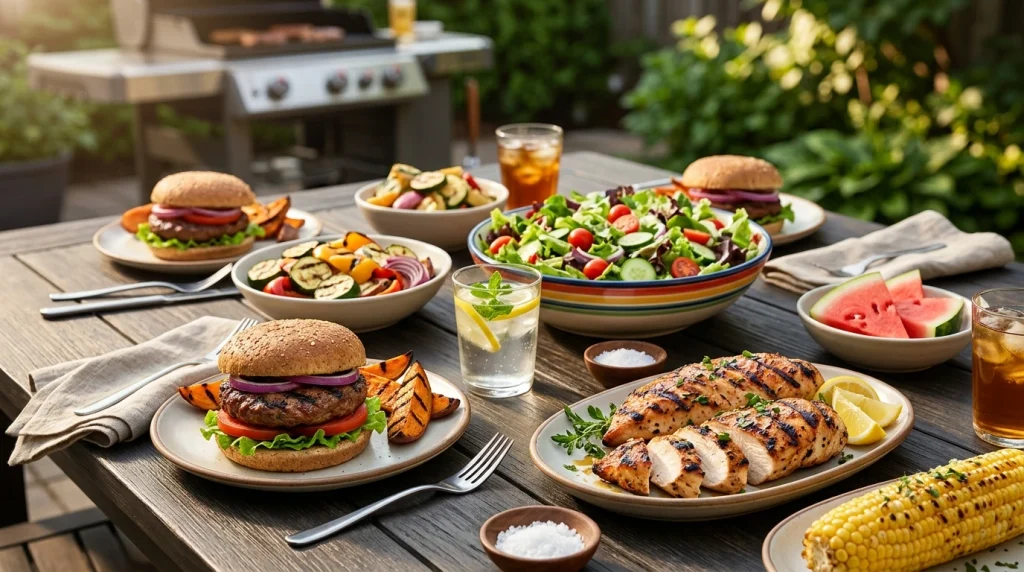
Main proteins set the baseline for cookout calories, and buns, cheese and sauces can add as much as another small meal. The figures below are approximate, based on typical USDA FoodData Central values. Brands, fat content and cooking method change them.
| Food (typical serving) | Approx. calories |
|---|---|
| Hamburger patty, 4 oz raw (80/20), grilled | 230–290 |
| Hamburger bun | 120–150 |
| Beef hot dog, one | 150–190 |
| Hot dog bun | 110–140 |
| Bratwurst, one link | 250–330 |
| Pork ribs, 3–4 bones, no sauce | 300–450 |
| Grilled chicken breast, skinless, 4 oz | 140–190 |
| Chicken thigh, skin on, grilled | 230–290 |
| American cheese slice | 60–100 |
| Bacon slice | 40–50 |
| Mayonnaise, 1 tbsp | 90–100 |
| BBQ sauce, 2 tbsp | 50–70 |
| Ketchup, 1 tbsp | 15–20 |
Calories in cookout sides and salads
Sides often add more calories than the main course, mostly through mayonnaise, cheese, sugar and oil. These cookout calories vary by recipe and portion, so treat the ranges below as typical estimates and check USDA FoodData Central for exact values.
- Potato salad: Mayonnaise drives the fat. A half-cup scoop is moderate, but a heaped plate climbs fast.
- Pasta salad: Oil-based dressing and cheese add density. Vinaigrette versions run lighter than creamy ones.
- Coleslaw: Cabbage is light; the creamy dressing and added sugar are not.
- Baked beans: Brown sugar and bacon raise the count, though the fiber helps fill you up.
- Mac and cheese: Usually the heaviest side, thanks to cheese, butter and cream.
- Corn on the cob: Plain, it is light. Butter adds roughly 100 calories per tablespoon.
- Chips and dips: Easy to overeat, since handfuls go uncounted.
Desserts and drinks at a cookout
Sweets and drinks can add several hundred cookout calories without anyone noticing. These are typical estimates, and they vary by recipe and pour size:
- Fruit pie (1 slice): about 300–400
- Ice cream (½ cup): about 140–200
- Brownie (2-inch square): about 150–250
- S’more (1): about 150–200
- Watermelon (1 cup, diced): about 45–50
- Soda (12 oz): about 140–150
- Lemonade (8 oz): about 100–130
- Regular beer (12 oz): about 140–160; light beer runs closer to 100
- Hard seltzer (12 oz): about 90–110
- Mixed cocktail: about 150–300 or more
Check labels or USDA FoodData Central for exact figures.
What makes cookout food so calorie-dense
Five habits push cookout calories up faster than most people expect.
- Fatty cuts: Ground beef with a higher fat share, sausages and ribs pack more energy into each ounce than lean chicken breast or fish.
- Mayonnaise-based sides: Potato salad, coleslaw and macaroni salad rely on mayo, and oil is the most concentrated source of calories on the table.
- Sugary sauces: Barbecue sauce and glazes add sugar, and they are easy to brush on thickly.
- Refined buns: Large buns add starch without much fiber, so they do little to keep you full.
- Constant grazing: Food stays out for hours, and refilling a small plate or snacking between rounds hides the real total.
Together, these raise calorie density, and a casual plate gets heavy before anyone counts it.
Smart swaps to lower cookout calories
Small substitutions add up fast. These swaps keep the cookout feel while trimming calories. Savings are rough estimates and vary by brand, portion size and preparation, so check labels or USDA FoodData Central for exact numbers.
- Lean patties or turkey burgers: choosing 90–93% lean beef or ground turkey typically saves about 50–100 calories per patty compared with 80/20 beef.
- Lettuce wrap instead of a bun: typically cuts roughly 100–150 calories.
- Grilled vegetables instead of chips or fries: often saves a few hundred calories per serving.
- Yogurt-based dressings: swapping Greek yogurt for mayonnaise in potato salad or coleslaw can save about 50–90 calories per two tablespoons.
- Sparkling water with citrus: replaces a 12-ounce soda’s roughly 140–150 calories with almost none.
How to build a balanced cookout plate
Use the MyPlate model as a visual guide: fill about half the plate with fruits and vegetables, and split the rest between protein and grains. The Dietary Guidelines for Americans also advise limiting added sugars, saturated fat, and sodium, so you can still eat your favorites in smaller amounts. For a deeper look at numbers and macros, see this cookout nutrition guide.
- Start with produce. Fill half your plate with corn on the cob, grilled vegetables, fruit, or a green salad.
- Pick one main. Choose a burger, hot dog, or grilled chicken, not all three.
- Portion the rich sides. Take a small scoop of potato salad or mac and cheese, about a quarter of the plate.
- Drink smart. Choose water or unsweetened drinks, and save sugar for dessert.
- Pause before seconds. Wait ten minutes, then decide if you are still hungry.
Key Takeaways
- A full plate adds up fast. A burger or hot dog, a couple of sides, a drink and dessert commonly reach roughly 1,000 to 1,500 calories, and seconds raise that.
- Toppings and buns matter. Cheese, bacon, sauce and a large bun can add as many calories as the patty itself.
- Creamy sides are the hidden load. Mayonnaise-based potato salad, coleslaw and pasta salad carry more calories than their ingredients suggest.
- Drinks and desserts count. Regular beer, sweet cocktails, sodas and shakes can add several hundred calories without feeling like food.
- Lean grilling is the easiest win. Skinless chicken, shrimp, fish and grilled vegetables keep calorie density low and portions satisfying.
- Portion size beats food rules. Build the plate around vegetables and lean protein, pick one starch, and enjoy one treat.
- Verify the numbers. Values vary by brand and recipe, so check labels, USDA FoodData Central, or our cookout nutrition guide for specifics.
Frequently Asked Questions About cookout calories
How many calories does the average person eat at a cookout?
There is no single average, because plates and portions vary widely. A typical meal of a burger or hot dog, a couple of sides, a drink and dessert commonly adds up to roughly 1,000 to 1,500 calories, and seconds push it higher. Compare your own portions against USDA FoodData Central values for a closer estimate.
How many calories are in a hamburger and hot dog at a cookout?
References & Further Reading
- USDA FoodData Central – U.S. Department of Agriculture
- Dietary Guidelines for Americans – U.S. Department of Agriculture and U.S. Department of Health and Human Services
- Centers for Disease Control and Prevention – CDC
About This Article
This guide was written with AI assistance from publicly available information. Prices, nutrition values and availability can change, so confirm important details with the official source before you decide.