
Good cookout allergen information starts before the first burger hits the grill, because a single hidden ingredient in a sauce, bun, or marinade can send a guest to the emergency room. Hosts often assume that simple grilled food is safe, yet shared tongs, sauces, and grill grates spread allergens quickly. This guide shows you where allergens hide, how to read labels, and how to protect every guest.
Why allergen planning matters at a cookout
A backyard cookout is one of the riskiest settings for a food allergy. Guests serve themselves from shared dishes, and one spoon can travel between bowls. Sauces, rubs and marinades mix many ingredients, and the labels often get thrown away before anyone reads them.
Hosts carry the responsibility. Guests cannot check an ingredient list on a dish they did not see made, and restaurants follow labeling rules that home kitchens do not. Good cookout allergen information starts with you: know what is in each dish and how it was handled.
Food allergies affect children and adults, and reactions can escalate within minutes. Planning ahead costs little. It lets every guest eat with confidence and keeps the party fun for everyone.
The nine major allergens and where they hide in cookout food
Federal law names nine major allergens, known as the Big 9: milk, eggs, fish, shellfish, tree nuts, peanuts, wheat, soy and sesame. Each one shows up at a typical backyard cookout, often where guests would not expect it.
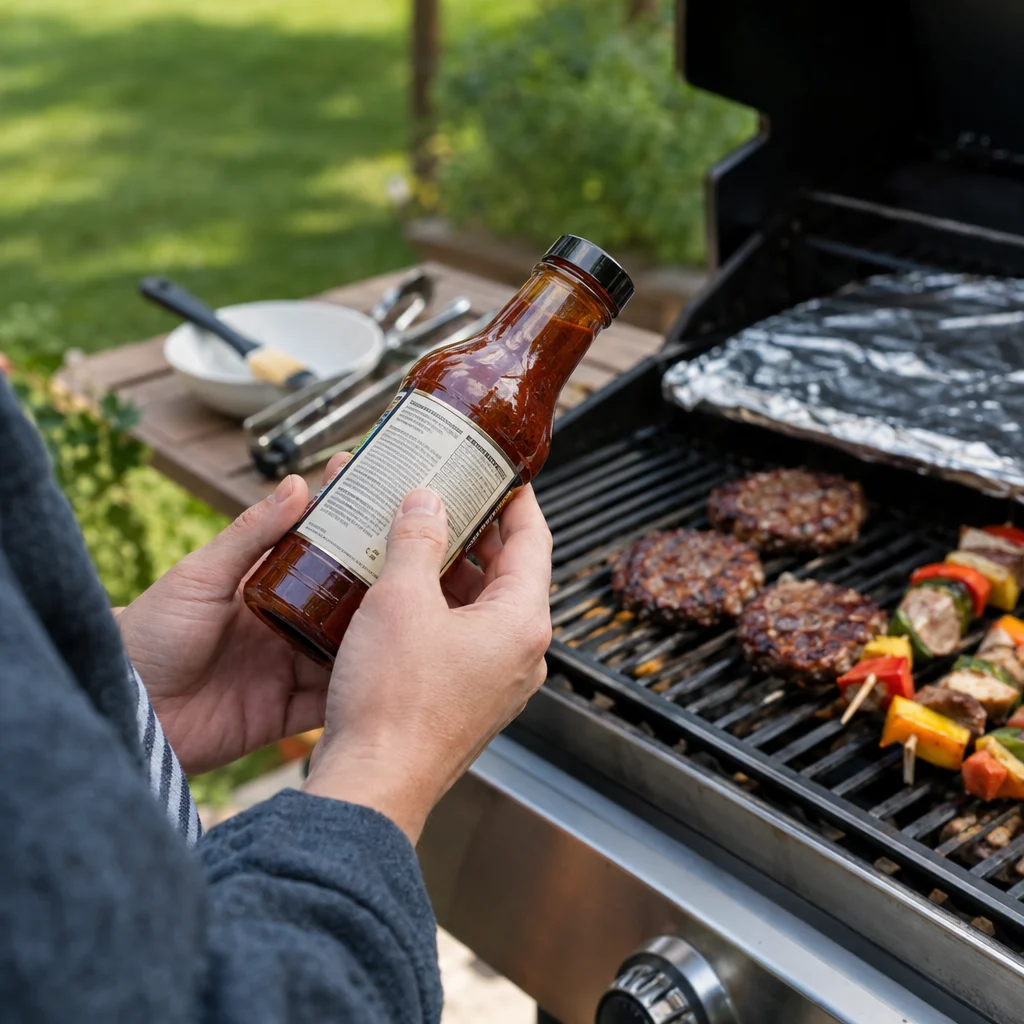
- Milk: buns, creamy coleslaw, mac and cheese, ranch, butter-basted corn.
- Eggs: mayonnaise, potato salad, deviled eggs, burger binders.
- Fish: Worcestershire sauce, Caesar dressing.
- Shellfish: shrimp skewers, seafood boils.
- Tree nuts and peanuts: desserts, pesto, some spice rubs.
- Wheat: buns, breaded items, marinades, some sausages.
- Soy: marinades, veggie burgers, soybean oil.
- Sesame: hamburger buns, tahini, sauces.
Keep this cookout allergen information handy when you shop and plan the menu.
Allergen sources in common cookout foods
Most cookout allergens come from buns, sauces and sides, not the meat. Use this table as a starting checklist for your cookout allergen information, then confirm each product’s label.
| Food | Typical allergens | What to check |
|---|---|---|
| Burger patties | Wheat, egg, milk (fillers or binders) | Plain ground beef versus seasoned or premade patties |
| Hot dogs and sausages | Milk, wheat, soy; sometimes mustard | Binders, casings and flavorings |
| Buns | Wheat, milk, egg, soy, sesame | Seeded tops and brioche |
| Marinades and sauces | Soy, wheat, fish, egg, sesame | Worcestershire, soy sauce, mayonnaise bases |
| Sides | Egg, milk, tree nuts, peanuts | Coleslaw, potato salad, mac and cheese |
| Desserts | Milk, egg, wheat, peanuts, tree nuts | Brownies, ice cream, cookies |
| Drinks | Milk, sometimes soy | Milkshakes, creamers, flavored mixes |
How to read labels and verify ingredients
Under FALCPA, packaged foods regulated by the FDA must name major food allergens in plain language. The FASTER Act added sesame in 2023, which makes nine required allergens. Manufacturers do this either in the ingredient list, such as “whey (milk),” or in a separate “Contains: milk, soy” statement.
Read the full ingredient list every time, because recipes change without notice. Precautionary statements like “may contain peanuts” or “made in a facility with tree nuts” are voluntary. The FDA does not standardize them, so treat them as a real warning and ask the guest what they are comfortable with.
Labels only cover packaged foods. Bakery items, deli meats, and bulk sauces may lack full information, so confirm with the seller.
Keep the packaging for every item you serve. Guests can check it, and you will have it in an emergency.
How to prevent cross-contact on the grill and buffet
Cross-contact happens when a trace of allergen moves onto food that should be safe. Heat does not remove it, so you must prevent it with separate tools, clean surfaces and smart ordering.
- Use separate utensils. Assign dedicated tongs, spatulas and serving spoons to each dish, and color-code them if you can.
- Clean or cover the grates. Scrub grates well, or cook allergen-safe items on heavy-duty foil or a separate grill.
- Cook safe food first. Put it on the clean grill before burgers with cheese, marinated meats or buns.
- Serve safe food first. Let allergic guests fill their plates before everyone else.
- Cover every dish. Lids and wraps stop drips, crumbs and shared-spoon mix-ups.
Keep allergen-free food on its own table section, away from sauces and desserts.
How to talk with guests and label your menu
Ask about allergies when you send the invitation. A simple line works: “Let me know about any food allergies so I can plan the menu.” Follow up with guests who mention one, and ask which foods they avoid and how severe the reaction is.
Post an ingredient card beside every dish. List the name, the major allergens it contains, and whether it was made near other allergens. Keep the original packages for sauces, rubs, buns, and sides so guests can check them.
Talk to guests who bring dishes. Ask them to list the ingredients and note any allergens on a card. Place their dishes with their own serving utensils, and never swap spoons between dishes.
What to do if a guest has an allergic reaction
Act fast. Anaphylaxis can worsen within minutes, so do not wait to see if symptoms pass.
Recognize the signs. Watch for hives, swelling of the lips or face, vomiting, trouble breathing, wheezing, throat tightness, dizziness or fainting. Symptoms in two or more body systems signal a severe reaction.
- Use epinephrine. If the guest has an epinephrine auto-injector, help them use it right away. Note the time.
- Call 911. Do this even if symptoms improve. Say the person is having an allergic reaction.
- Lay the guest down with legs raised. If they are vomiting or struggling to breathe, let them sit up or lie on their side.
- Keep the packaging. Save labels, wrappers and sauce bottles so responders can identify the trigger.
A second dose may be needed if symptoms persist. Follow the guest’s own emergency plan and the dispatcher’s instructions.
Key Takeaways
- Know the Big 9. Milk, eggs, fish, crustacean shellfish, tree nuts, peanuts, wheat, soybeans and sesame are the major U.S. allergens, and all of them can show up in cookout food.
- Read every label, every time. Sauces, rubs, buns, marinades and sides often contain hidden allergens, and manufacturers can change recipes without notice.
- Keep the packaging. Save labels and boxes so guests can check ingredients themselves.
- Prevent cross-contact. Heat does not destroy allergens. Use a clean grill, separate utensils and platters, and serve the allergy-safe food first.
- Ask guests early. Find out about allergies before the party, then label dishes clearly with their main allergens.
- Plan for emergencies. Learn the warning signs, know where a guest keeps an epinephrine auto-injector, and call 911 if a severe reaction starts.
Frequently Asked Questions About cookout allergen information
What are the most common allergens at a cookout?
The most common allergens are wheat in buns and marinades, milk in cheese and creamy sides, eggs in mayonnaise-based salads, soy in sauces and processed meats, and peanuts or tree nuts in desserts. Fish and shellfish appear in seafood dishes and some sauces. Sesame often hides in buns and seasonings.
Is barbecue sauce safe for people with food allergies?
Not automatically. Barbecue sauce can contain soy, wheat, fish (as in Worcestershire sauce), or sesame, depending on the brand. Always read the full ingredient list and allergen statement on the bottle. Recipes vary and change, so check the label each time you buy, even for a familiar brand.
Are hot dogs and burgers gluten-free?
Not always. Plain ground beef is naturally gluten-free, but seasoned patties, some hot dogs and sausages may contain wheat-based fillers or binders. The bun almost always contains wheat. Check each package for a gluten-free claim or an ingredient list, and serve gluten-free buns separately.
Can you cook allergy-safe food on the same grill as other food?
It is risky. Residue from other foods can stick to grates and transfer allergens. If you must share a grill, scrub the grates thoroughly, preheat, and use fresh foil or a grill mat. Cook the allergy-safe food first, with clean utensils and a clean platter.
Does cooking or heat destroy food allergens?
No. Allergens are proteins, and grilling, baking, or boiling does not reliably remove them. Even a tiny trace left on a grate or spatula can trigger a reaction. Preventing contact is the only safe approach, so keep allergen-containing foods and tools separate from safe ones.
How do I label food for guests with allergies at a party?
Place a card in front of each dish listing its name and any major allergens it contains, such as milk, egg, wheat, or soy. Keep ingredient packaging nearby for guests to check. Use separate serving utensils for each dish, and tell guests to ask you if the card does not cover their concern.
Are potato salad and coleslaw common allergen risks?
Yes. Both are often made with mayonnaise, which contains eggs, and some recipes add mustard, milk, or buttermilk. Store-bought versions may include soy or other ingredients. Read the label on every component, or ask the person who prepared the dish exactly what went into it.
What should I do if a guest has an allergic reaction at my cookout?
Act fast. If the guest has an epinephrine auto-injector, help them use it right away, then call 911, even if symptoms improve. Have the person lie down with legs raised unless breathing is difficult. Stay with them, note what they ate, and tell responders about the epinephrine dose and time.
References & Further Reading
- FDA: Food Allergies – U.S. Food and Drug Administration
- Food Allergy Research & Education – FARE
- Centers for Disease Control and Prevention – CDC
About This Article
This guide was written with AI assistance from publicly available information. Prices, nutrition values and availability can change, so confirm important details with the official source before you decide.