
Pizza looks simple, yet the gap between a forgettable slice and a great one comes down to dough, heat, and a handful of ingredients. If you want to understand why styles differ, where the dish began, and what separates quality from average, the details are easy to miss. This guide covers the history, main styles, ingredients, method, toppings, and nutrition in one place.
What Is Pizza and Why It Became a Global Staple
Pizza is a baked flatbread built on three basics: yeasted dough, tomato sauce and melted cheese, usually mozzarella. From that simple base, cooks add toppings, change the crust and adjust the bake to create dozens of regional versions.
Three traits explain its reach. It is affordable, easy to share and endlessly adaptable. A single pie feeds a group, travels well and suits almost any budget or dietary preference.
In the United States, it works as a default choice for family dinners, game days, school events and late-night meals. Local pizzerias, national chains and frozen aisles all keep it within easy reach. Its flexibility lets every region claim a style of its own.
The Origins and History of Pizza
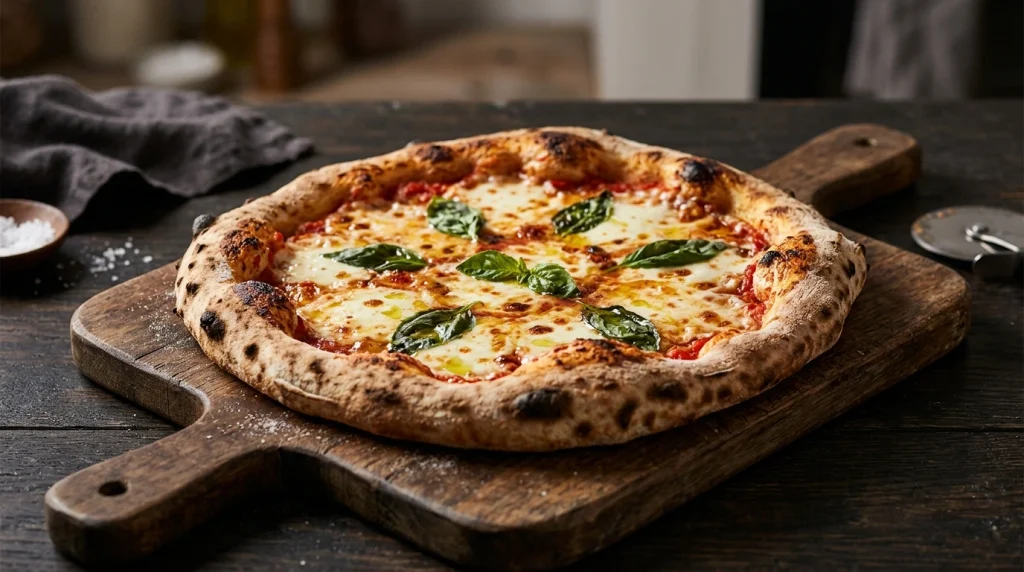
Flatbreads with toppings are ancient, but the pizza we know took shape in Naples, Italy, where bakers sold it as cheap street food to working-class residents in the 1700s and 1800s.
Tomatoes, a New World crop, became a common topping in Naples over time. Here is how the story moves from there:
- Ancient roots: Mediterranean cultures baked flatbreads with oil, herbs, and other simple toppings.
- Naples: Vendors sold large, foldable rounds from stalls and small shops, and the Margherita pizza became the city’s best-known recipe.
- New York: Italian immigrants opened pizzerias in the early 1900s, and coal-fired ovens helped the style spread.
- Across the US: Post-war growth brought regional versions such as Chicago deep dish.
Main Types of Pizza Styles
The main types of pizza differ most in crust thickness, oven type and topping load. This table compares six major pizza styles at a glance.
| Style | Crust | Bake method | Typical toppings |
|---|---|---|---|
| Neapolitan | Soft, thin center with a puffy, charred rim | Wood-fired oven, very high heat, about 90 seconds | Tomato, fresh mozzarella, basil |
| New York | Thin, foldable, crisp edge | Deck oven, sold by the slice | Tomato sauce, low-moisture mozzarella |
| Chicago deep dish | Tall, buttery, pan-formed walls | Deep pan, long bake | Cheese first, chunky tomato sauce on top |
| Detroit | Thick, airy, crispy fried-cheese edges | Rectangular steel pan | Brick cheese, sauce on top |
| Sicilian | Thick, spongy, focaccia-like | Oiled sheet pan | Tomato sauce, cheese, sometimes breadcrumbs |
| California | Thin to medium, often crisp | Home or restaurant oven | Inventive: seasonal vegetables, goat cheese, chicken |
Bake times and toppings vary by shop, so treat these as typical traits rather than strict rules.
Core Ingredients That Define Great Pizza
Few ingredients make a great pie, so each one matters. Quality shows in how well they work together.
- Flour: Higher-protein flour builds gluten, which gives pizza dough chew and structure. Finely milled “00” flour bakes tender and crisp.
- Water and yeast: Hydration controls openness in the crumb. Slow fermentation develops flavor and airy pockets.
- Tomatoes: Ripe, lightly seasoned tomatoes bring sweetness and acidity. Look for a bright, fresh taste rather than a sugary or pasty one.
- Cheese: Mozzarella supplies creamy, mild richness. Fresh versions melt softly, while low-moisture mozzarella browns and stretches.
- Olive oil: A small amount adds aroma and a silky finish.
Good quality looks balanced: a blistered crust, a thin layer of sauce and cheese that doesn’t pool with grease.
How Pizza Is Made and Baked
Great crust starts with time. Bakers mix flour, water, salt and yeast, then let the pizza dough ferment, often for 24 hours or more in a cool place. Slow fermentation develops flavor and creates the gas pockets that become an airy, chewy crumb.
Next, bakers portion and shape the dough. Neapolitan makers stretch it by hand to keep the edge puffy. Others use a rolling pin or a pan. Sauce goes on thinly, followed by cheese and toppings.
Heat then sets the crust:
- Wood-fired oven: roughly 800–900°F, finishing in about 90 seconds with a leopard-spotted, blistered edge.
- Deck oven: typically 500–600°F, giving a crisp, evenly browned base.
- Home oven: usually 500–550°F at maximum; a preheated stone or steel mimics a deck’s bottom heat.
Higher heat means faster baking and a softer interior.
Popular Pizza Toppings and Flavor Pairings
The best pizza toppings follow one rule: balance salt, fat, acid and freshness, and keep moisture low.
- Classic: pepperoni, mushrooms, onions, sausage and basil.
- Regional: clams in Connecticut, Canadian bacon and pineapple in Hawaiian-style pies, and anchovies in southern Italy.
- Pairings: spicy sausage with honey, prosciutto with arugula, and mushrooms with caramelized onions.
Overloading is the most common mistake. Too many toppings release steam, which leaves a soggy center and an underbaked crust. Limit each pie to two or three main toppings. Pat wet ingredients like fresh mozzarella and tomatoes dry, and precook watery vegetables such as zucchini or spinach. Add delicate items like basil or arugula after baking.
Nutrition and Enjoying Pizza in a Balanced Diet
A slice delivers carbohydrates from the crust, protein and calcium from cheese, and fat that rises with every added topping. Calories, sodium and saturated fat vary widely by size, crust thickness and toppings, so check the restaurant’s or brand’s posted nutrition information for exact numbers.
Thin-crust slices with vegetables typically run lighter than deep dish or meat-heavy pies. Processed meats and extra cheese push sodium highest.
Practical ways to lighten a meal:
- Choose thin crust or a smaller size.
- Load up on vegetables such as peppers, mushrooms and spinach.
- Ask for less cheese or a lean protein like grilled chicken.
- Pair a slice or two with a side salad.
- Eat slowly and stop when satisfied.
Key Takeaways
- Origins: Flatbreads with toppings are ancient, but the modern tomato-and-cheese pie took shape in Naples.
- Styles: Neapolitan, New York-style, Chicago deep dish and Detroit-style differ mainly in crust thickness, pan, oven and cheese placement.
- Ingredients: Flour, water, yeast, salt, tomatoes and mozzarella do the heavy lifting, so quality matters more than quantity.
- Method: Dough rested or fermented over time tastes better and bakes with a lighter, chewier texture.
- Heat: Very high heat gives the best crust, whether it comes from a wood-fired oven or a home oven set to its maximum.
- Toppings: The best combinations balance salt, acidity, richness and freshness instead of piling on extras.
- Balance: A slice fits into a healthy diet when you watch portions, choose vegetables and lean proteins, and pair it with a salad.
Frequently Asked Questions About pizza
What is the difference between Neapolitan and New York-style pizza?
Neapolitan is small, soft and slightly charred. It bakes in a wood-fired oven in about a minute or two, with simple toppings and fresh mozzarella. New York-style is larger, with a thinner, foldable crust baked in a gas deck oven. It uses shredded low-moisture mozzarella and is typically sold by the slice.
Who invented pizza?
No single person invented it. Ancient cultures baked flatbreads with toppings, and the modern version with tomato and cheese developed in Naples, Italy, over the 1700s and 1800s. A popular story credits a Naples pizzaiolo with creating the Margherita in 1889 for Queen Margherita, though historians treat that account cautiously.
How many calories are in a slice of pizza?
It varies widely. A regular slice of cheese from a large pie typically falls somewhere around 200 to 400 calories. Thick crusts, extra cheese and meat toppings push that number higher. Slice size also differs by restaurant, so check the nutrition information from the chain or maker for an accurate figure.
What kind of cheese is best for pizza?
Low-moisture, whole-milk mozzarella is the standard for most American styles because it melts evenly, browns well and doesn’t release much water. Fresh mozzarella suits Neapolitan and Margherita pies, but pat it dry and use it sparingly. Provolone, Parmesan and pecorino work well as accents on top of mozzarella.
What temperature should pizza be baked at?
Hotter is better. Home ovens typically work best at 475 to 550°F, the highest setting available, with a preheated stone or steel. A wood-fired oven often reaches 800°F or more, baking a Neapolitan pie in roughly 60 to 90 seconds. Always follow the instructions for your dough style and oven.
Why is pizza dough left to rest or ferment?
Resting relaxes the gluten, so the dough stretches without snapping back. Fermentation lets yeast produce gas, which creates an airy crumb, and it develops more complex flavor. Many bakers ferment dough in the refrigerator for a day or more. Longer, cooler fermentation typically gives better taste and a crisper, more digestible crust.
What is the difference between deep dish and Detroit-style pizza?
References & Further Reading
- Associazione Verace Pizza Napoletana – Associazione Verace Pizza Napoletana
- UNESCO Art of Neapolitan Pizzaiuolo – UNESCO
- USDA FoodData Central – U.S. Department of Agriculture
About This Article
This guide was written with AI assistance from publicly available information. Prices, nutrition values and availability can change, so confirm important details with the official source before you decide.