
Cookout hot dogs look simple, but split casings, dry centers and cold buns can turn a crowd-pleaser into a letdown. This guide covers which hot dogs to buy, how to grill them evenly, and how to set up toppings so guests can build their own. Follow it and every dog comes off the grill hot, juicy and safe to serve.
What Makes the Best Hot Dogs for a Cookout
The best hot dogs for grilling are plump, well-seasoned franks that hold up over direct heat. For cookout hot dogs, start with the type, then check size and ingredients.
- All-beef frankfurters: bold, savory flavor and a firm bite.
- Pork or beef-pork blends: milder and juicier, and often cheaper.
- Natural casing: a snappy skin that splits when it chars.
- Skinless: softer and more tender, and easy for kids to eat.
Choose standard 8-count packs for classic buns, or quarter-pound franks for a heartier meal. Read the label for short ingredient lists and a fair meat content.
Plan on two hot dogs per adult and one or two per child. Add extras if the menu is hot dogs only.
Hot Dog Buns and Gear You Need Before You Fire Up the Grill
Pick the bun and gather your tools before the coals get hot, because hot dogs cook fast and leave no time to hunt for a spatula.
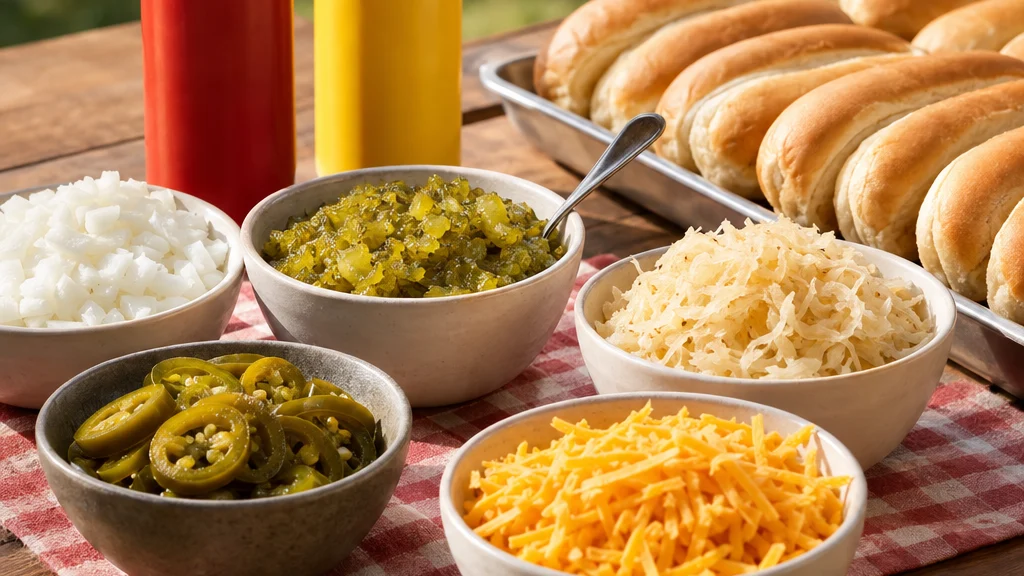
Choose a bun that matches your toppings. Standard buns suit classic condiments, split-top buns toast evenly on a flat surface, and poppy seed buns fit a Chicago-style hot dog. Toast them cut side down for 30 to 60 seconds, or brush them lightly with butter first.
- Long-handled tongs: turn the dogs without piercing them.
- Instant-read thermometer: confirm the internal temperature.
- Clean serving tray: keep cooked dogs off the plate that held raw ones.
- Two-zone setup: on a charcoal grill, bank the coals to one side. On a gas grill, run one burner on high and leave another off.
How to Grill Hot Dogs Step by Step
Medium heat and steady turning give you juicy hot dogs with an even char. Most take about 5 to 8 minutes in total, though timing varies by grill and thickness, so go by color and heat, not the clock alone.
- Heat the grill. Preheat a gas grill to medium, around 350°F to 400°F. On a charcoal grill, bank the coals to one side to make a hot zone and a cooler zone.
- Score lightly. Cut shallow slits, about 1/8 inch deep, across each dog. This helps them cook evenly and catch more char.
- Start on direct heat. Lay them across the hot zone and turn every minute or two for even browning.
- Finish on indirect heat. Slide any dogs that darken too fast to the cooler side until they are hot through.
- Toast the buns. Place them cut side down for 30 to 60 seconds, just until golden.
Check the USDA guidance on safe internal temperatures before serving.
Safe Temperatures and Holding Hot Dogs for a Crowd
USDA food safety guidance says to heat hot dogs to 165°F, especially when you reheat leftovers or serve people at higher risk. Most packaged franks are fully cooked, but they can pick up bacteria after the package is opened. Check one with an instant-read thermometer.
Outdoors, the two-hour rule applies. Discard hot dogs left out longer than two hours, or one hour when the temperature is 90°F or above.
To hold franks without drying them out, move them to a foil pan with a little water or broth. Cover the pan and set it over the cool side of the grill, or in a slow cooker on warm. Keep the holding temperature at 140°F or higher. Grill in small batches and refill the pan often.
Classic and Regional Hot Dog Toppings
Each regional style follows a fixed formula. Pick one for your cookout, or offer several and let guests choose.
| Style | Signature toppings | Bun and notes |
|---|---|---|
| Chicago-style hot dog | Yellow mustard, sweet pickle relish, chopped onion, tomato wedges, pickle spear, sport peppers, celery salt | Poppy seed bun. Ketchup is traditionally left off. |
| New York | Spicy brown or yellow mustard, sauerkraut, onions in sauce | Plain bun. Street-cart classic. |
| Coney | Meat chili sauce, yellow mustard, chopped onion | Soft steamed bun. Styles vary by city. |
| Sonoran | Bacon wrap, pinto beans, diced tomato, onion, mayonnaise, mustard, jalapeño salsa | Soft, slightly sweet bolillo-style roll. |
Start with the basics: ketchup, mustard and relish. Then add one regional option, such as chili or sauerkraut, to keep prep manageable.
How to Set Up a Hot Dog Bar for Guests
Build the bar as a one-way line: plates, buns, hot dogs, toppings, then condiments. Guests move left to right and never double back. Put the bar on a long table, and keep drinks elsewhere to prevent a bottleneck.
- Quantities: Plan on roughly two hot dogs per adult. Typically, set out about one to two tablespoons of each topping per dog, then adjust for your crowd.
- Dietary options: Offer gluten-free buns and plant-based franks. Grill them on a separate, clean section of the grate and label them clearly.
- Cold toppings: Set bowls of onions, tomatoes and slaw inside larger bowls of ice. Refill small batches from the refrigerator instead of leaving everything out.
- Warm items: Keep chili and cheese sauce in a slow cooker on low.
Common Cookout Hot Dog Mistakes to Avoid
Most grilling failures come down to heat and timing. Here is each one with its fix.
- Splitting: Flames that are too hot burst the casing. Cook over medium heat and turn often.
- Flare-ups: Dripping fat ignites and leaves sooty, bitter skin. Keep a cooler zone free of coals or burners, and move the franks there until the flames die down.
- Overcooking: Dry, shriveled dogs have stayed too long. Pull them when they are hot throughout and lightly browned.
- Soggy buns: Piling on wet toppings too early softens the bread. Toast the buns and add toppings just before serving.
- Cold centers: Charred outsides can hide an unheated middle. Make shallow slashes on thick franks and check that the center is steaming hot.
Key Takeaways
- Start with quality: Choose all-beef frankfurters or another well-seasoned brand you like, and match the bun size to the dog.
- Use medium heat: Grill over medium heat and turn often. Most franks need only a few minutes to heat through and brown.
- Know the safety line: Hot dogs are precooked, but USDA food safety guidance says to serve them steaming hot. Keep them at 140°F or higher while guests eat.
- Use both grill zones: On a charcoal or gas grill, keep a hotter side for searing and a cooler side for holding.
- Build around toppings: Offer classic condiments plus one or two regional styles, such as a Chicago-style setup.
- Set up the bar for flow: Put buns first, then dogs, then toppings. Label everything and keep cold items on ice.
- Avoid the common errors: Don’t crowd the grate, don’t use high flames, and don’t leave cooked franks sitting out too long.
Frequently Asked Questions About cookout hot dogs
How long does it take to grill hot dogs?
Typically 5 to 10 minutes over medium heat, turning every minute or two. Look for even browning and plump, hot centers. Thicker franks and cooler grills take longer, while thin ones finish faster. Judge by color and heat rather than the clock, since grill temperatures vary widely.
What temperature should hot dogs be cooked to?
Hot dogs are sold fully cooked, so grilling is really reheating. USDA guidance says to heat them until steaming hot, and 165°F is the standard target for reheated foods. Check one with an instant-read thermometer if you are unsure, especially when grilling from frozen or serving vulnerable guests.
How many hot dogs should I plan per person at a cookout?
Plan on about two hot dogs per adult and one to two for each child. If you are serving other mains, such as burgers or chicken, one per person may be enough. Add a few extras for hungry guests, and buy buns to match the dog count.
Should I boil hot dogs before grilling them?
No, it isn’t necessary, because hot dogs are already cooked. Boiling can dull flavor and soften the casing. For a big crowd, a short simmer in hot water can speed things up, but finish the franks on the grill for color and char. Pat them dry first so they brown.
What is the best way to keep hot dogs warm at a party?
Hold them at 140°F or above. Use a slow cooker on warm, a chafing dish, or the cooler side of your grill, and add a little hot water to prevent drying. Cook in batches instead of all at once, and don’t leave them out for more than about two hours.
Are all-beef hot dogs better for grilling?
Not automatically, but many cooks prefer them for their fuller, beefier flavor and firm bite. Quality depends more on seasoning, casing, and fat content than on the meat type alone. Try a couple of brands side by side and pick the one that browns well and tastes best to you.
How do I stop hot dogs from splitting on the grill?
Use medium heat instead of high flames, which cause the casing to burst. Turn the franks often so they heat evenly, and pull them as soon as they are hot. Shallow scoring, such as spiral or diagonal cuts, lets steam escape and gives you more surface for char.
Can I grill hot dogs on a gas grill and charcoal grill the same way?
Yes, the basic method is the same: medium heat, frequent turning, and pulling them when hot and browned. Charcoal adds smoky flavor and needs a two-zone fire to manage flare-ups. A gas grill heats up faster and holds a steadier temperature. Expect small timing differences between the two.
References & Further Reading
- USDA Food Safety and Inspection Service: Hot Dogs and Food Safety – U.S. Department of Agriculture
- National Hot Dog and Sausage Council – National Hot Dog and Sausage Council
- FoodSafety.gov – U.S. Department of Health and Human Services
About This Article
This guide was written with AI assistance from publicly available information. Prices, nutrition values and availability can change, so confirm important details with the official source before you decide.